






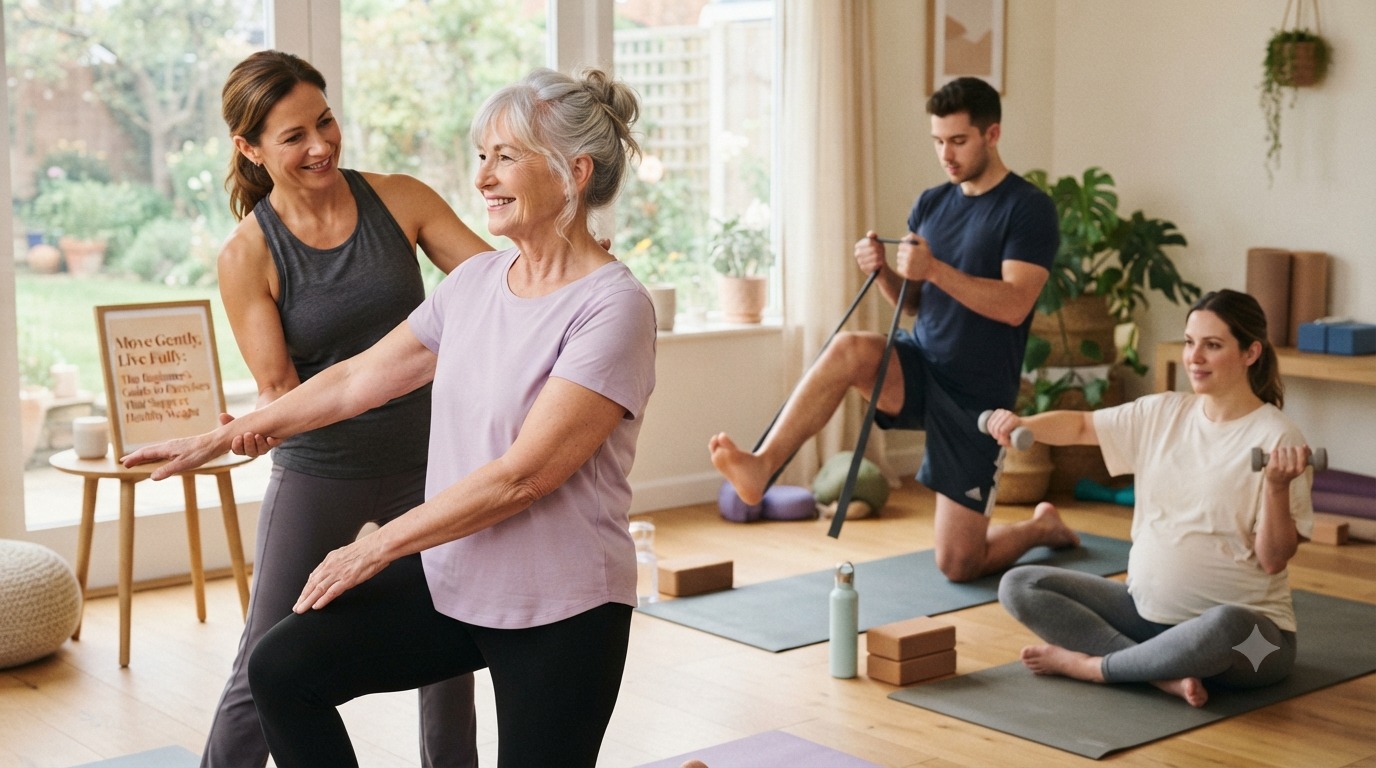

There is a quiet lie that has been sold to beginners for decades: that the only exercise worth doing is the kind that leaves you breathless, sore, and dreading tomorrow. This is not only untrue; it is the very reason so many promising journeys toward better health end before they begin.
The truth is more hopeful. When it comes to using movement to support a healthy weight, the science tells a story of gentle consistency, not heroic suffering. Your body does not need to be punished. It needs to be invited, patiently and repeatedly, into a rhythm of activity it can trust.
This guide is for anyone standing at the starting line. Perhaps you have not exercised in years, or perhaps you have tried and felt discouraged. The exercises below are simple. They are kind. And they work, not because they are extreme, but because they meet you exactly where you are.
Why Movement Matters (Even When the Scale Is Stubborn)
Before we look at the exercises themselves, let us clear up a common misconception. Many people begin exercising with the sole hope of watching the number on the scale plummet. When it does not drop quickly, they feel defeated.
But here is what the research reveals: as a stand-alone strategy, physical activity alone is unlikely to produce clinically meaningful weight loss unless exercise levels are quite high, often in the range of 225 to 420 minutes per week . This is important to understand, not to discourage you, but to reframe your expectations.
The true power of exercise for weight management lies in maintenance. Once you have lost weight, the only way to keep it off is to engage in regular physical activity . Exercise is not merely a tool for loss; it is the scaffolding that prevents regain. Furthermore, movement improves sleep quality, reduces blood pressure, lowers the risk of type 2 diabetes, and lifts symptoms of depression and anxiety . These benefits arrive long before any change in clothing size.
The Role of Diet and Movement Together
Most weight loss occurs from decreasing calories . Exercise augments that effort, but the kitchen matters deeply. The most sustainable approach combines a modest calorie reduction with the exercises below. The goal is not to burn off every bite you eat; it is to build a body that feels strong, mobile, and energetic.
The Best Beginner Exercises for Healthy Weight
The following exercises are all calisthenics, meaning they use your own body weight for resistance. They require no fancy equipment, no gym membership, and can be done in the privacy of your living room . They are scalable, meaning you can make them easier or harder depending on your strength and energy on any given day .
Table 1: A Beginner’s At-Home Routine
| Exercise | Primary Muscles Worked | How to Begin (Beginner Level) | How to Progress |
|---|---|---|---|
| Squats | Glutes, thighs, calves, core | 3 sets of 5–10 reps. Use a chair for support or do “sit-to-stands.” | Aim for 3 sets of 15 reps. Add a pause at the bottom. |
| Lunges | Glutes, thighs, abs | 3 sets of 5 reps per leg. Hold onto a wall or chair for balance. | Reverse lunges are gentler. Work up to 3 sets of 10 per leg. |
| Wall Push-Ups | Chest, shoulders, triceps | 3 sets of 8–10 reps. Stand facing a wall, hands at shoulder height. | Lower to a countertop, then a bench, then the floor. |
| Planks | Core (abs, back, hips) | Hold for 15–30 seconds. Knees on the floor for support. | Build to 3 sets of 30–60 seconds. Lift knees off the floor. |
| Glute Bridges | Glutes, lower back, hamstrings | 3 sets of 10 reps. Lie on your back, lift hips toward ceiling. | Pause and squeeze at the top. Try single-leg bridges. |
| Marching in Place | Cardiovascular system, hips | 1–2 minutes. Lift knees to hip height, swing arms naturally. | Increase speed or duration. Add high knees if comfortable. |
Source: Adapted from Cleveland Clinic, Alberta Health Services, and beginner bodyweight guidelines .
A Note on Aerobic Exercise
Strength training is crucial, but aerobic activity—the kind that raises your heart rate—is the engine of calorie burning. The good news is that you do not need to run marathons. Brisk walking, swimming, cycling at a casual pace, or even dancing in your kitchen all count .
A review of 116 randomized trials found that people who did aerobic exercise for just 30 minutes per week saw some reduction in weight and waist size. Those who exercised for 150 minutes per week lost, on average, about six pounds and 1.3 inches from their waist over the study period . The message is clear: more is better, but something is infinitely better than nothing.
Table 2: Calories Used in 30 Minutes of Common Activities
| Activity (Moderate Intensity) | Calories Burned (154 lb person) | Activity (Vigorous Intensity) | Calories Burned (154 lb person) |
|---|---|---|---|
| Hiking | 185 | Running (5 mph) | 295 |
| Light gardening | 165 | Swimming laps | 255 |
| Dancing | 165 | Aerobics class | 240 |
| Bicycling (<10 mph) | 145 | Walking (4.5 mph) | 230 |
| Walking (3.5 mph) | 140 | Heavy yard work | 220 |
| Weight lifting (light) | 110 | Basketball (game) | 220 |
| Stretching | 90 | Jumping rope | 300+ |
Source: Centers for Disease Control and Prevention . Note: Calories burned vary by individual weight and effort.
How Much Is Enough? A Gentle Guide
The standard recommendation for overall health is at least 150 minutes of moderate-intensity aerobic activity per week, plus two days of muscle-strengthening activity . For weight maintenance after loss, you may need more than this—the exact amount varies greatly from person to person .
But here is the crucial part for beginners: do not start with 150 minutes. Start with what feels manageable. A ten-minute walk after dinner. Five squats before your morning coffee. The goal in the first two weeks is not fitness; it is consistency. You are building a habit, not training for a marathon.
Dr. Michael Dakkak of the Cleveland Clinic suggests aiming for two to four days of strength training per week, with a day of rest in between to allow muscles to repair . For aerobic activity, a daily walk is a beautiful place to begin.
Five Gentle Rules for the Beginner
1. Warm Up and Cool Down. Five to ten minutes of gentle movement before you begin prepares your muscles and reduces injury risk. A few minutes of stretching afterward helps with recovery .
2. Progress Slowly. The most common mistake beginners make is doing too much too soon, leading to soreness, frustration, and abandonment. Add a little time or a few repetitions each week, not each day .
3. Listen to Your Body. If you feel sharp pain, stop. If you feel breathless but can still speak in short sentences, you are working at a good moderate intensity . If you are gasping and cannot talk, slow down.
4. Consistency Over Intensity. A 15-minute walk every day will do more for your health than a punishing two-hour session once a week that leaves you exhausted and unwilling to return.
5. Combine Movement with Kind Eating. Exercise alone rarely produces dramatic weight loss. But when paired with modest dietary changes—more vegetables, fewer sugary drinks, adequate protein—it becomes a powerful ally .
Frequently Asked Questions
How long before I see results?
This is perhaps the most common question, and the honest answer is: it depends. Some people notice improved energy, better sleep, and looser clothing within two to three weeks. Visible changes in body composition often take one to two months of consistent effort . The scale may move slowly, but your strength and stamina will improve sooner than you think.
Can I exercise if I have joint pain or I am significantly overweight?
Yes, but choose wisely. Swimming, water aerobics, and stationary cycling are excellent because they place less stress on joints . Wall push-ups and chair squats are gentler than their floor-based counterparts. Always consult with your doctor before beginning a new exercise program, especially if you have existing health conditions .
Is it better to exercise in the morning or evening?
The best time to exercise is the time you will actually do it. Some people find morning movement sets a positive tone for the day; others prefer evening to release tension. Avoid vigorous exercise within two hours of bedtime if you find it disrupts your sleep .
What should I eat after a workout?
You do not need special supplements or protein powders. A balanced meal or snack with some protein and carbohydrates—like yogurt with fruit, or a small chicken wrap—supports recovery. If you are exercising to manage weight, be mindful that you are not “eating back” more calories than you burned .
How do I stay motivated?
Motivation is fickle. Systems are more reliable. Schedule your movement like an appointment. Find an activity you genuinely enjoy—if you hate running, do not run. Walking with a friend, dancing, or gardening all count. Track your progress, not just on the scale, but in how you feel and what your body can do .
Helpful Websites and Resources
- Centers for Disease Control and Prevention (CDC) – Physical Activity for a Healthy Weight: Reliable, evidence-based guidelines and tips. (cdc.gov)
- American Heart Association (AHA) – Exercise and Fitness: Resources on how physical activity supports heart health and weight management. (heart.org)
- Harvard Health Publishing – Exercise and Fitness: Accessible summaries of the latest research on exercise and weight. (health.harvard.edu)
- Cleveland Clinic Health Essentials – Fitness and Exercise: Beginner-friendly workout guides and explanations. (health.clevelandclinic.org)
A Conclusion That Begins with a Single Step
The journey toward a healthier weight is not a race, and it is certainly not a punishment. It is a slow, patient return to the body you live in—a body that is capable of more than you might believe right now.
The exercises in this guide are not glamorous. They will not go viral on social media. But they are the quiet, proven tools that have helped countless people rebuild their strength, their confidence, and their health. Start with five minutes. Start with one set. Start with a walk around the block.
The goal is not to become someone who exercises. The goal is to become someone who moves—someone who takes the stairs when they can, who stretches in the morning, who feels the pleasant ache of muscles that have been used.
That version of you is already there, waiting. All you have to do is begin.
Imp. Note: This article is for informational purposes only and is not a substitute for professional medical advice, diagnosis, or treatment. Always seek the guidance of your physician or another qualified health provider with any questions you may have regarding a medical condition or before starting a new exercise program. If you experience pain, dizziness, shortness of breath, or any other concerning symptoms during physical activity, stop immediately and consult a healthcare professional.