






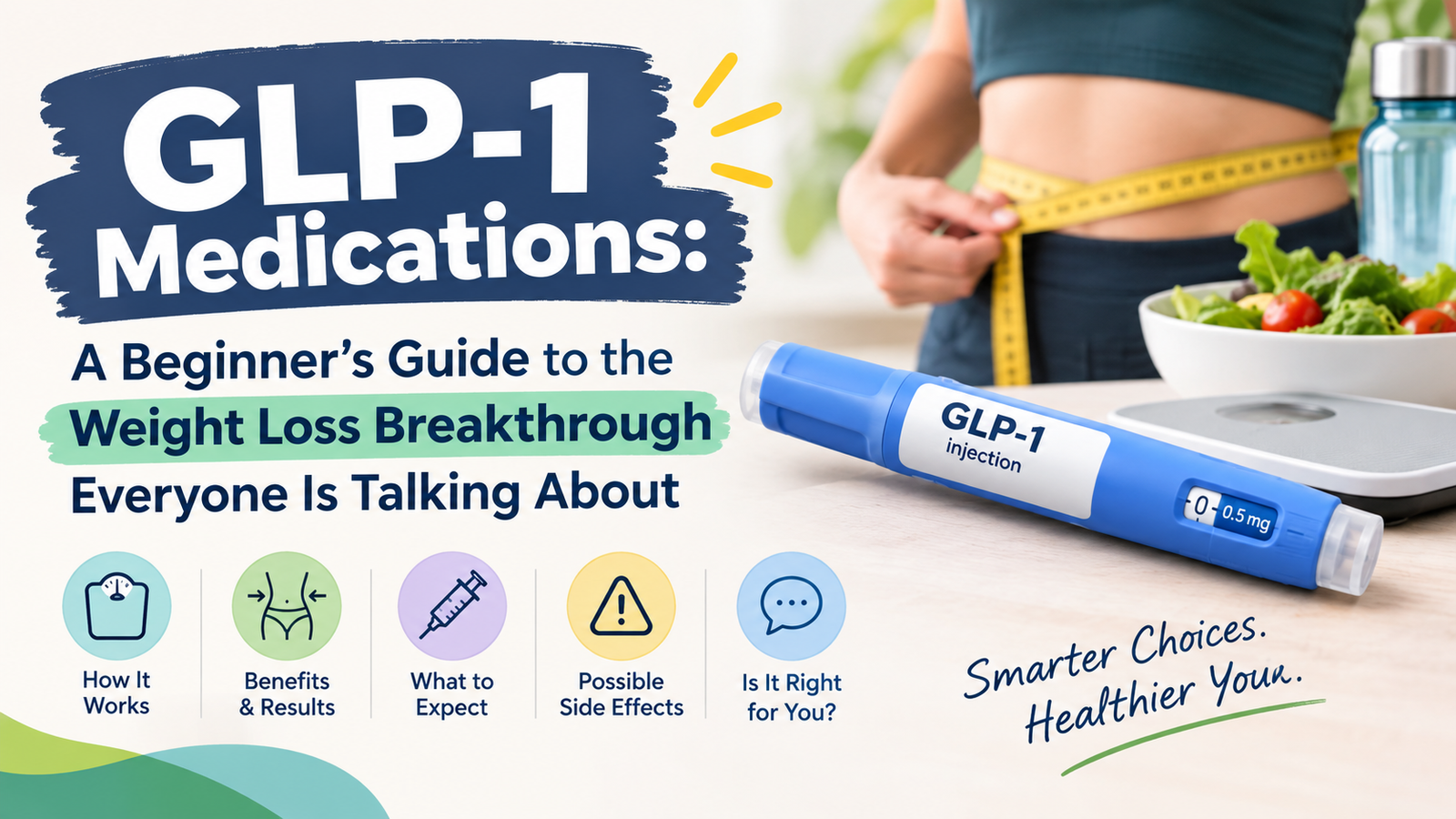

A Note Before We Begin: GLP-1 medications have transformed how we think about weight management, but they are not a magic bullet. They are serious prescription medications with real benefits and real risks. This guide draws from reputable medical sources to help you understand what these drugs are, how they work, and what to consider before starting. It is not a substitute for professional medical advice. Please consult your healthcare provider to determine if a GLP-1 medication is right for you.
Introduction: A New Era in Weight Management
For decades, the advice for weight loss was painfully simple: eat less, move more. And for millions of people, that advice failed—not because they lacked willpower, but because obesity is a complex metabolic disease, not a behavioral flaw.
Then came GLP-1 medications.
Originally developed to treat type 2 diabetes, these drugs revealed an unexpected side effect: significant weight loss. Today, about 41 million Americans—roughly 1 in 8—have used a GLP-1 medication. They have become cultural touchstones, dinner-table debates, and medical breakthroughs all at once.
But what exactly are they? How do they work? And most importantly, are they right for you?
This guide is designed for beginners—people who have heard the headlines, seen the transformations, and are wondering whether these medications might help them. No hype. No judgment. Just clear, evidence-based information to help you make an informed decision with your healthcare provider.
1. What Are GLP-1 Medications?
GLP-1 stands for glucagon-like peptide-1. It is a hormone your gut naturally produces after you eat. This hormone plays several roles in your body:
- It signals your pancreas to release insulin when blood sugar rises
- It slows down how quickly food leaves your stomach
- It tells your brain you are full
GLP-1 medications are synthetic versions of this hormone—or, in some cases, drugs that mimic its effects even more powerfully. They were first approved for type 2 diabetes because of their ability to lower blood sugar. But when researchers noticed that patients taking them were also losing weight, a new era in obesity treatment began.
The medications work by amplifying the effects of your natural GLP-1. They reduce appetite, slow digestion, and quiet what many patients describe as “food noise”—the constant mental chatter about eating.
2. The Major GLP-1 Medications (and How They Differ)
Not all GLP-1 medications are the same. They come in different formulations, doses, and delivery methods. Here are the main players:
Semaglutide (Ozempic, Wegovy, Rybelsus)
Semaglutide is the active ingredient in several medications. Ozempic is approved for type 2 diabetes. Wegovy uses the same ingredient at a higher dose and is approved specifically for weight management. Rybelsus is an oral form approved for diabetes.
In clinical trials, people with obesity who used semaglutide alongside lifestyle changes lost about 15% of their body weight over 68 weeks—roughly 34 pounds on average. For comparison, participants who did not take the medication lost about six pounds.
Tirzepatide (Mounjaro, Zepbound)
Tirzepatide is a dual agonist—it targets both GLP-1 and GIP (glucose-dependent insulinotropic polypeptide) receptors. This dual action may make it slightly more effective than semaglutide for some people. Mounjaro is approved for diabetes; Zepbound is approved for weight management and also for moderate to severe obstructive sleep apnea in adults with obesity.
Liraglutide (Victoza, Saxenda)
Liraglutide is an older GLP-1 medication. It requires daily injections rather than weekly. It is effective but generally produces less weight loss than semaglutide or tirzepatide.
Oral Options
For people who prefer pills to injections, oral semaglutide (Rybelsus) is available for diabetes. In 2026, an oral formulation of Wegovy was approved for weight management in the EU, with similar weight loss results to the injectable form. The pill is taken once daily on an empty stomach, 30 minutes before eating or drinking.
| Medication | Active Ingredient | Approved For | Delivery | Typical Weight Loss |
|---|---|---|---|---|
| Ozempic | Semaglutide | Type 2 diabetes | Weekly injection | ~15% (off-label) |
| Wegovy | Semaglutide | Weight management | Weekly injection or daily pill | ~15% |
| Mounjaro | Tirzepatide | Type 2 diabetes | Weekly injection | ~20% (off-label) |
| Zepbound | Tirzepatide | Weight management, sleep apnea | Weekly injection | ~20% |
| Saxenda | Liraglutide | Weight management | Daily injection | ~8% |
3. How Do They Work? The Science Made Simple
The mechanism behind GLP-1 medications is elegant and multifaceted.
First, they slow gastric emptying. Food stays in your stomach longer, so you feel full sooner and stay full longer. This is why many people on GLP-1s report that they simply cannot eat as much as they used to—and why eating fatty or fried foods can cause nausea.
Second, they act on the brain. GLP-1 receptors exist in the hypothalamus, the region that controls appetite and satiety. The medications enhance the signals that tell your brain you have had enough.
Third, they regulate blood sugar by stimulating insulin release when glucose rises, while suppressing glucagon (a hormone that raises blood sugar).
The combined effect is a profound reduction in appetite and food cravings. For many people, this is the first time in years—or ever—that they have felt truly in control of their eating.
As Dr. W. Scott Butsch of Cleveland Clinic explains: “Obesity isn’t a behavioral problem. It’s not managed by just eating less or exercising more. Obesity is a complex metabolic disease. It’s a dysfunction of the normal pathways that regulate our body weight.”
4. Who Is a Good Candidate?
GLP-1 medications for weight management are typically prescribed for adults who meet specific criteria:
- BMI of 30 or higher (obesity)
- BMI of 27 or higher with at least one weight-related health condition, such as high blood pressure, type 2 diabetes, high cholesterol, or obstructive sleep apnea
- Adolescents ages 12 and older with obesity may qualify for certain medications like Wegovy
These medications are not intended for people who want to lose a few pounds. They are for people with a medical need—those whose weight is impacting their health.
Your healthcare provider will also consider your medical history, current medications, and any conditions that might make GLP-1s unsafe for you.
5. Who Should Avoid GLP-1 Medications?
GLP-1 medications are not suitable for everyone. You should not take them if you have:
- A personal or family history of medullary thyroid cancer (MTC) or Multiple Endocrine Neoplasia syndrome type 2 (MEN 2)
- A history of pancreatitis (inflammation of the pancreas)
- Severe stomach or bowel problems, such as gastroparesis or inflammatory bowel disease
- Severe kidney problems (for certain GLP-1 medications)
- Type 1 diabetes
- Diabetic retinopathy
- A history of serious allergic reactions to GLP-1 medications
Women who are pregnant or breastfeeding should not use these medications. If you are planning to become pregnant, talk to your doctor about stopping the medication first.
Additionally, GLP-1s are not recommended for people with a history of eating disorders. The appetite-suppressing effects could interact dangerously with disordered eating patterns.
6. Common Side Effects (And How to Manage Them)
The most common side effects of GLP-1 medications are gastrointestinal: nausea, vomiting, diarrhea, constipation, and abdominal pain. These effects are most pronounced when starting the medication or increasing the dose, and they typically improve over time.
Nausea is the most frequently reported side effect across all GLP-1 medications. It is also the leading reason people stop treatment.
How to manage side effects:
| Side Effect | Management Strategies |
|---|---|
| Nausea | Eat smaller, more frequent meals; avoid fatty or fried foods; stop eating when full |
| Diarrhea | Drink plenty of fluids (8–10 glasses daily); limit dairy; try bland foods like rice or toast |
| Constipation | Prioritize fiber and hydration; fruits, vegetables, and whole grains |
| Vomiting | Eat bland foods; avoid strong smells; stay hydrated |
Stanford Medicine emphasizes that most side effects are transient. “Your body adapts and then they go away,” says Dr. Dan Azagury. “But you have to get over the initial hump, and that’s where having a care team that knows what to expect really matters.”
7. Serious Risks You Should Know About
While most side effects are manageable, GLP-1 medications carry risks of serious—though rare—complications.
Pancreatitis. The MHRA (UK’s medicines regulator) updated guidance in January 2026 to alert patients and prescribers to the small risk of severe acute pancreatitis. Symptoms include severe, persistent stomach pain that may radiate to the back, accompanied by nausea and vomiting. If you experience these symptoms, seek urgent medical attention.
Thyroid tumors. In studies with rats, GLP-1 medications caused thyroid tumors, including cancer. It is not known whether they cause thyroid tumors in humans, but the risk is serious enough that people with a personal or family history of medullary thyroid cancer should not use these medications.
Kidney problems. Dehydration from vomiting or diarrhea can lead to kidney injury, particularly in people who are already vulnerable.
Gallbladder problems. Rapid weight loss—from any cause—increases the risk of gallstones.
Loss of muscle and bone mass. A 2026 review in the New England Journal of Medicine noted that GLP-1 medications may cause loss of muscle and bone mass, raising questions about long-term functional implications.
Bowel obstruction. Though uncommon, GLP-1-mediated slowing of gastrointestinal motility could precipitate bowel obstruction, particularly in people with prior abdominal surgery or severe constipation.
8. Lifestyle Changes That Make GLP-1s Work Better
GLP-1 medications are not a substitute for healthy habits. They are a tool that works best when combined with lifestyle changes.
Protein is critical. When you are eating much less, meeting your protein needs requires intention. Stanford Medicine recommends 0.5 to 0.7 grams of protein per pound of body weight daily. For a 200-pound person, that is 100–140 grams—roughly a chicken breast at lunch, Greek yogurt for a snack, and salmon at dinner, with eggs or cottage cheese filling the gaps.
Strength training preserves muscle. Resistance training two to three times per week is the most effective way to ensure that the weight you lose is fat, not muscle.
Hydration matters. GLP-1s can increase fluid loss, especially if you experience vomiting or diarrhea. Drink water consistently throughout the day.
Avoid trigger foods. Fatty and fried foods are particularly hard to tolerate on GLP-1s. Many patients find they simply cannot eat them without feeling sick.
Don’t race to the highest dose. If side effects are severe, staying at a lower dose longer can help your body adjust. There is no rush.
9. What Happens If You Stop?
This is one of the most important things to understand before starting: GLP-1 medications are generally intended for long-term use.
A large 2026 analysis of more than 9,000 patients found that people who stopped semaglutide or tirzepatide regained an average of nearly 2 pounds per month. The STEP 1 trial extension found that patients regained two-thirds of their lost weight within a year of stopping.
Cardiometabolic improvements—blood sugar, blood pressure, cholesterol—also largely reverted to baseline.
“Think about medications that lower blood pressure,” says Dr. Bonnet of Stanford. “When taken, blood pressure comes down. If stopped, it goes back up. Nobody is surprised by that. It’s the same logic here.”
Some people do maintain weight loss after stopping—perhaps 20%—but it is the exception, not the rule. The common thread among those who succeed is a significant life change that fundamentally alters their relationship to food and activity.
If you are considering a GLP-1, go in with the understanding that this may be a lifelong commitment.
10. The Cost Question
GLP-1 medications are expensive. Without insurance, most cost around $1,000 per month.
But the landscape is changing rapidly.
Manufacturer savings programs can reduce costs significantly. For commercially insured patients with coverage, Ozempic may cost as little as $25 per month through a savings card. For self-pay patients, prices vary by medication and dose.
Medicare changes. Starting July 2026, eligible Medicare beneficiaries can access certain GLP-1 medications for $50 per month through the CMS Medicare GLP-1 Bridge program. The BALANCE Model, beginning in 2027, aims to further expand access.
New options. The oral form of Wegovy is cheaper to produce and does not require refrigeration, making it more affordable for self-pay patients. Cash prices range from $149 to $299 per month depending on the dose.
A critical warning: The National Consumers League and FDA strongly advise against purchasing compounded GLP-1 products or “alternatives” sold online. Unlike FDA-approved medications, these products do not go through rigorous review for safety, effectiveness, and quality. They may contain undisclosed ingredients or incorrect doses.
Helpful Websites (Fact-Checked and Trustworthy)
A 2024 data-mining study analyzed 432 Google searches for weight loss and identified the most trustworthy non-advertising websites based on accuracy statements, author credentials, and reputation scores. These sites consistently provide evidence-based information:
| Website | Category | Reputation Score | Why It’s Trustworthy |
|---|---|---|---|
| mayoclinic.org | Health | 100/100 | Mayo Clinic Staff authorship, evidence-based |
| healthline.com | Health | 96/100 | Fact-checked, written by healthcare professionals |
| webmd.com | Health | 96/100 | Physician-reviewed content |
| verywellfit.com | Nutrition & Diet | 88/100 | Nutrition-focused, fact-checked |
| womenshealthmag.com | Women’s Health | 88/100 | Author credentials and fact-checking |
Additional government and institutional resources:
- FDA (fda.gov): Official drug approvals, safety communications, and medication guides
- DailyMed (dailymed.nlm.nih.gov): Official prescribing information and medication guides for Zepbound, Wegovy, and others
- MHRA (gov.uk/mhra): UK safety updates and guidance for GLP-1 prescribers and patients
- CDC Healthy Weight (cdc.gov/healthy-weight-growth): Practical steps for weight management
Caution: Be wary of websites that promise rapid results, sell supplements, or lack author credentials. The study found that “Personal Pages and Blogs” often lack transparency about authorship and accuracy.
Frequently Asked Questions
Q: How much weight can I expect to lose on a GLP-1?
A: In clinical trials, semaglutide (Wegovy) produced about 15% weight loss over 68 weeks, and tirzepatide (Zepbound) produced about 20%. Individual results vary based on dose, lifestyle, and how long you take the medication.
Q: How long does it take to see results?
A: Most people notice reduced appetite within the first week or two. Weight loss begins gradually, with noticeable changes typically appearing after 4–8 weeks. It can take several months to see the full benefits.
Q: Can I take Ozempic for weight loss if I don’t have diabetes?
A: Ozempic is FDA-approved for type 2 diabetes. Prescribing it for weight loss is considered “off-label.” Wegovy, which contains the same active ingredient at a higher dose, is the version approved specifically for weight management. Most insurance plans will only cover Wegovy for weight loss, not Ozempic.
Q: Are GLP-1 medications safe for long-term use?
A: Clinical trials and real-world data support their safety for many people, but questions remain about long-term effects, particularly on muscle and bone mass. Most clinicians view them as long-term treatments for a chronic condition, similar to blood pressure medications.
Q: What happens if I miss a dose?
A: For weekly injections like Zepbound, if you miss a dose, take it within 4 days of your scheduled day. If more than 4 days have passed, skip the missed dose and resume your regular schedule. Do not take two doses within 3 days of each other.
Q: Can I drink alcohol while taking a GLP-1?
A: Alcohol is not strictly prohibited, but many patients find they no longer want it. Alcohol can worsen nausea and dehydration. It also adds empty calories that work against your weight loss goals. Talk to your provider about your individual situation.
Q: Will I regain weight if I stop?
A: Most likely, yes. Research shows that the majority of people regain a significant portion of lost weight after stopping. The medications are generally intended for long-term use.
A Final Word: A Tool, Not a Miracle
GLP-1 medications are remarkable. They have given millions of people a tool that finally makes weight management feel possible—not through willpower alone, but through biology.
But they are not magic. They do not replace the need for nourishing food, movement, sleep, and support. They do not work for everyone. And they come with real costs and real risks.
The best approach is an informed one: talk to your doctor, understand your options, and go in with clear eyes about what these medications can—and cannot—do.
For many people, they are life-changing. For others, they are not the right fit. Only you and your healthcare provider can decide together.
Imp. Note: This article is for informational purposes only and does not constitute medical advice. Always consult with a qualified healthcare professional before starting, stopping, or changing any medication.