





There is a strange paradox at the heart of modern nutrition. We live in an age of abundance, yet millions of people walk around silently deficient in the very nutrients their bodies need to function. The food is there. The knowledge is not.
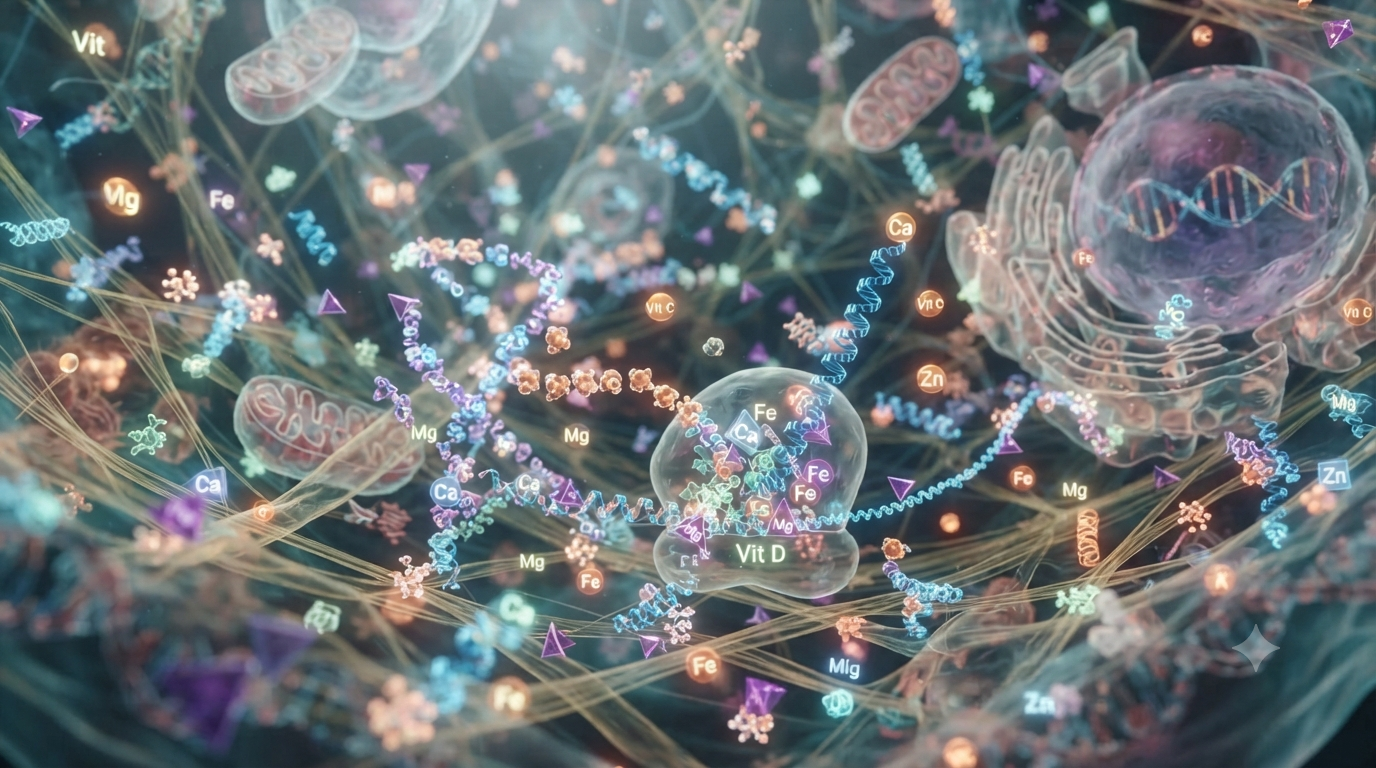
Vitamins and minerals are the invisible architects of your health. They do not provide calories. They do not build muscle directly. They do not appear on a nutrition label as something you can feel. Yet without them, every system in your body—from the beating of your heart to the firing of your neurons to the healing of a paper cut—would grind to a halt.
This guide is your introduction to these essential micronutrients. What they are, why they matter, and how to ensure you are getting enough of them from the food you eat.
What Exactly Are Vitamins and Minerals?
The term “micronutrients” refers to vitamins and minerals because your body needs them in very small amounts . But small does not mean insignificant. Deficiencies in any of them can cause severe, even life-threatening conditions .
Vitamins and minerals are fundamentally different substances. Vitamins are organic compounds—their structures revolve around carbon and hydrogen, the building blocks of all living things. Minerals are inorganic elements, found in soil and water, that your body uses in their simplest forms. Many minerals also function as electrolytes, carrying electrical charges that your body builds chemical compounds around. The iron in your hemoglobin, the calcium in your bones, the iodine in your thyroid hormones—all are minerals doing essential work .
Most vitamins and minerals are essential, meaning you cannot live without them. A few are “conditionally essential,” meaning your body can usually make them on its own, but sometimes cannot, requiring supplementation .
Table 1: The Two Categories of Vitamins
The Essential Cast: What Each Nutrient Does
There are 13 essential vitamins and a host of essential minerals. You do not need to memorize them all. But understanding the major players—and what happens when they are missing—helps you make better food choices.
The Fat-Soluble Vitamins: A, D, E, K
Vitamin A is the guardian of your vision and immune system. It helps you see in dim light, keeps your skin healthy, and supports cell growth in organs like the heart and lungs . Deficiency is a leading cause of preventable blindness in children worldwide . Find it in orange and yellow vegetables like carrots and sweet potatoes, leafy greens like spinach, dairy products, and liver .
Vitamin D is the sunshine vitamin, and it is unique. Very few foods naturally contain it. Your skin manufactures it when exposed to sunlight . It regulates calcium and phosphate absorption, making it essential for bone, teeth, and muscle health . Deficiency is remarkably common in northern latitudes, where winter sunlight is too weak for synthesis. Oily fish like salmon and mackerel, egg yolks, and fortified foods are the primary dietary sources .
Vitamin E is a powerful antioxidant, protecting your cells from damage caused by free radicals. It keeps your skin and eyes healthy and strengthens your immune system . Plant-based oils, nuts, seeds, and green leafy vegetables are rich sources .
Vitamin K is essential for blood clotting—the process that stops you from bleeding out from a simple cut. It also supports bone health . Green leafy vegetables like kale, spinach, and broccoli are the best sources .
The Water-Soluble Vitamins: B Complex and C
The B vitamins are a family of eight nutrients that work as a team to convert food into energy, produce red blood cells, and maintain a healthy nervous system . Each has a specific role:
- B1 (Thiamin): Energy metabolism and nerve function. Found in whole grains, meat, and fish .
- B2 (Riboflavin): Energy production and red blood cell formation. Found in milk, eggs, and lean meats .
- B3 (Niacin): Digestion, cholesterol regulation, and skin health. Found in meat, fish, and fortified cereals .
- B5 (Pantothenic Acid): Converting food into energy. Found in beef, poultry, potatoes, and avocado .
- B6 (Pyridoxine): Protein metabolism and hemoglobin production. Found in meat, fish, poultry, and chickpeas .
- B7 (Biotin): Cell growth and healthy hair and nails. Found in eggs, salmon, and whole grains .
- B9 (Folate): Critical for cell division and preventing neural tube defects in pregnancy. Found in fortified grains, legumes, and leafy greens .
- B12 (Cobalamin): Red blood cell formation and nervous system function. Found almost exclusively in animal products—meat, fish, dairy, and eggs .
Vitamin C is perhaps the most famous vitamin, and for good reason. It is an antioxidant that protects cells, maintains connective tissue, heals wounds, and boosts immune function. It also dramatically improves your body’s absorption of iron from plant sources . Citrus fruits, strawberries, bell peppers, broccoli, and potatoes are excellent sources .
Table 2: Key Minerals and Their Roles
The Deficiency Crisis: Who Is at Risk?
Micronutrient deficiencies are not a problem of the past. The World Health Organization estimates that more than 2 billion people worldwide are deficient in key vitamins and minerals, particularly vitamin A, iodine, iron, and zinc . In the United States, approximately 1 in 4 women has iron deficiency during pregnancy, and 1 in 8 women aged 12 to 49 has iron deficiency .
Certain groups are at particularly high risk:
- Pregnant and breastfeeding women: Their nutrient needs increase significantly to support both their own health and the development of their baby .
- Infants and young children: Rapid growth demands abundant nutrients, and deficiencies can cause lasting cognitive and physical damage .
- Women of reproductive age: Menstruation depletes iron, making deficiency common .
- People on restrictive diets: Strict vegans may struggle to get enough B12, iron, and zinc. Those on low-calorie diets may miss essential nutrients .
- People with malabsorption conditions: Crohn’s disease, ulcerative colitis, and bariatric surgery can impair nutrient absorption .
- Older adults: Appetite declines, absorption decreases, and medication interactions can all contribute to deficiencies .
The consequences of deficiency are not always dramatic. Severe deficiency causes diseases like scurvy (vitamin C), rickets (vitamin D), and anemia (iron, folate, B12) . But subclinical deficiencies—levels low enough to impair function but not low enough to cause obvious disease—can cause fatigue, reduced mental clarity, weakened immunity, and decreased work capacity . You may not feel “sick,” but you are not thriving either.
Food First: The Case Against Relying on Supplements
The supplement industry is enormous, promising health in a bottle. But the evidence tells a more complicated story.
A healthy, balanced diet containing a variety of foods should provide all the vitamins and minerals your body needs to work properly . Foods provide more than isolated nutrients. They contain fiber, phytonutrients, and other compounds that work together in ways we are only beginning to understand .
Research on multivitamin supplements has been largely disappointing. Most studies have found that taking a multivitamin has little or no effect on the risk of cancer, heart disease, or overall mortality . The people who take supplements tend to be those who need them least—they already eat healthier diets and have healthier lifestyles .
This does not mean supplements are useless. They are essential for certain populations:
- Folic acid before and during early pregnancy prevents neural tube defects .
- Vitamin D supplementation is recommended for people with limited sun exposure, particularly in northern latitudes .
- B12 supplements are necessary for strict vegans, who cannot get it from plant foods .
- Iron supplementation may be needed for people with diagnosed iron deficiency anemia .
But for the general population, the evidence supports food first. Supplements should fill gaps, not replace meals .
Table 3: When Supplements Make Sense
How Cooking Affects Your Nutrients
Here is something many people do not realize: the way you prepare food can dramatically affect its nutrient content.
Water-soluble vitamins, particularly vitamin C and the B vitamins, are vulnerable to heat, air, and water. Boiling vegetables can leach water-soluble vitamins into the cooking water, which is then poured down the drain . Vitamin C is especially sensitive—it degrades with heat and exposure to oxygen .
To preserve nutrients, steam or grill vegetables rather than boiling them. If you do boil, use the cooking liquid in soups or stews so the nutrients are not lost . Fresh and frozen produce generally retain more vitamins than canned, though canned foods are still nutritious .
Frequently Asked Questions
Do I need to take a multivitamin?
Most healthy adults who eat a varied diet do not need one. Research shows that multivitamins have little effect on major health outcomes like cancer and heart disease for well-nourished populations . However, certain groups—pregnant women, strict vegans, older adults with poor appetite—may benefit .
Can I get too many vitamins or minerals?
Yes, and this is particularly dangerous with fat-soluble vitamins. Vitamin A in high doses can be toxic and cause birth defects. Minerals like chromium, manganese, and selenium can cause heavy metal poisoning in excess . Always tell your healthcare provider about every supplement you take .
What are the most common deficiencies?
Iron, vitamin A, and iodine deficiencies are the most common worldwide, particularly affecting children and pregnant women. In the United States, iron deficiency is common among women of reproductive age .
How can I tell if I am deficient?
Some deficiencies show up on standard blood work, including vitamin D, vitamin B12, and iron. Your doctor can test for these during an annual checkup. Symptoms like persistent fatigue, weakness, or cognitive fog can signal a deficiency, but only testing can confirm it .
Are fortified foods a good way to get nutrients?
Fortification has been a public health triumph. Iodized salt has dramatically reduced iodine deficiency worldwide, and folic acid fortification of grains has reduced neural tube defects . Fortified foods can help fill nutrient gaps, but they should not replace whole foods.
What is the difference between folate and folic acid?
Folate is the naturally occurring form of vitamin B9 found in foods like leafy greens and legumes. Folic acid is the synthetic form used in supplements and fortified foods. Both are effective, but folic acid is more easily absorbed .
Helpful Websites and Resources
- NIH Office of Dietary Supplements – Fact sheets for professionals and consumers on every vitamin and mineral. (ods.od.nih.gov)
- Centers for Disease Control and Prevention (CDC) – Micronutrient information and deficiency monitoring. (cdc.gov/nutrition)
- World Health Organization (WHO) – Global guidance on micronutrient deficiencies and interventions. (who.int)
- Cleveland Clinic – Accessible articles on vitamins, minerals, and supplementation. (my.clevelandclinic.org)
- NHS Inform – Clear explanations of vitamins, minerals, and food sources. (nhsinform.scot)
A Conclusion That Begins at the Table
The human body is a marvel of biochemistry, performing millions of reactions every second. Vitamins and minerals are the catalysts, the cofactors, the raw materials that make it all possible. They do not announce themselves. You will never feel the moment vitamin C neutralizes a free radical or calcium deposits into bone. But you will feel their absence.
The path to adequate nutrition is not complicated, though it requires intention. Eat a variety of foods. Cook them gently. Pay attention to what your body needs. If you are unsure whether you are getting enough, ask your doctor about testing. If you are in a group that benefits from supplementation, take it thoughtfully.
You do not need to be perfect. You do not need to obsess over every milligram. You need only to remember that the food on your plate is not just calories and macronutrients. It is information. It is building material. It is the invisible architecture of your health, laid down one meal at a time.
Imp. Note: This article is for informational purposes only and is not a substitute for professional medical advice, diagnosis, or treatment. Always seek the guidance of your physician or another qualified health provider with any questions you may have regarding a medical condition or before starting any supplement or making dietary changes. Vitamins and minerals can be harmful in excessive amounts, and supplements can interact with medications. Do not take supplements without consulting your healthcare provider, especially if you are pregnant, breastfeeding, or managing a chronic health condition.